Sprinkler Winterization in Ontario: The Complete Blowout Guide
Ontario winters freeze irrigation lines solid. Here is how a proper compressed-air blowout works and when to schedule it.
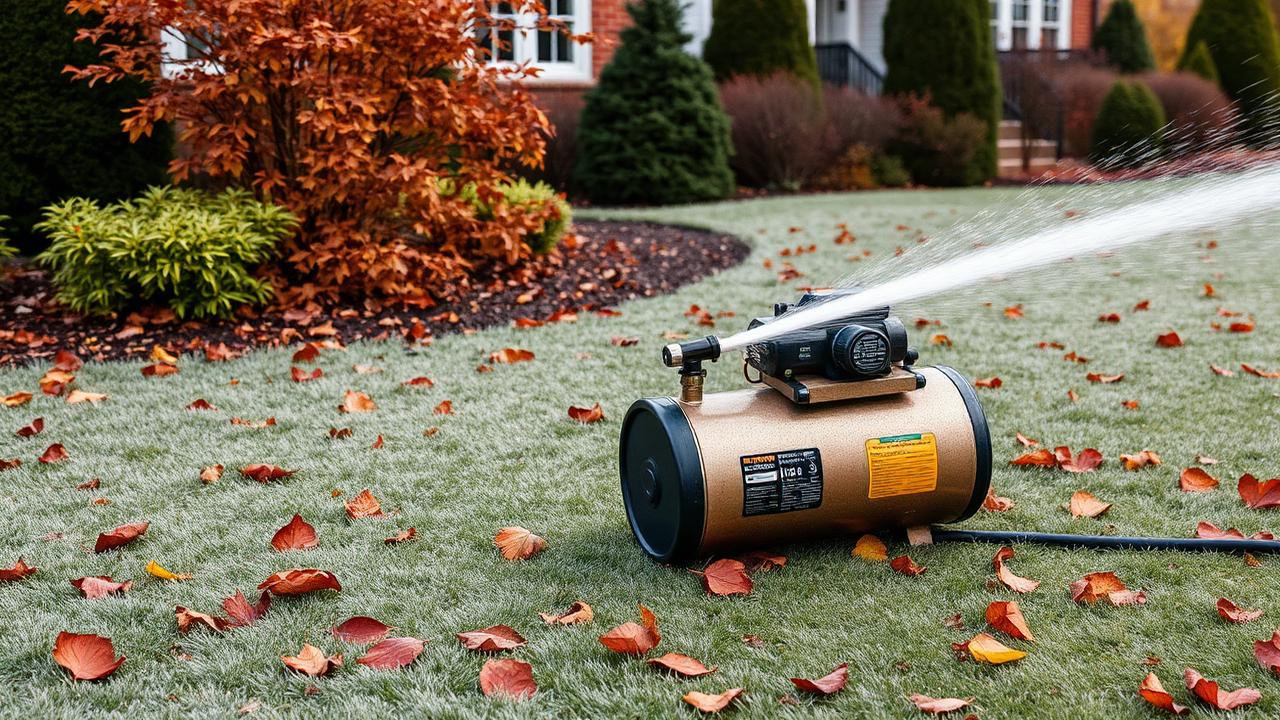
Why draining is not enough
Even a well-graded system holds water in low spots, valve bodies and sprinkler bodies. Water expands about 9% when it freezes, which is more than enough to crack poly pipe, brass valves and the backflow assembly. Replacing a frozen backflow device costs many times what a winterization visit does.
When to winterize in the GTA
Target the window between the first hard frost warning and the first sustained freeze, generally mid-October to mid-November. Do not wait for snow.
How a professional blowout works
- The water supply is shut off at the irrigation isolation valve and the mainline is drained.
- A high-volume compressor connects downstream of the backflow device.
- Each zone runs on air, one at a time, at controlled pressure (typically under 80 psi for rigid pipe and under 50 psi for poly).
- Zones are cycled twice to clear residual water that settles between passes.
- The backflow device is isolated, test cocks are opened at 45 degrees, and the controller is set to off or rain mode.
Why pressure control matters
Consumer shop compressors move too little air, so people compensate with high pressure. High pressure with low volume melts gears inside rotor heads and shreds seals. Volume, not pressure, pushes water out.
After the blowout
Leave the controller powered if it stores the schedule in volatile memory, or record your program before shutting it down. Keep valve box lids clear so spring access is easy.
Book winterization online, get an emailed confirmation, and receive a service report when it is complete.