Why Your Lawn Has Dry Spots: Irrigation Troubleshooting
Brown patches in an irrigated lawn almost always trace back to five specific causes. Here is how to identify yours.
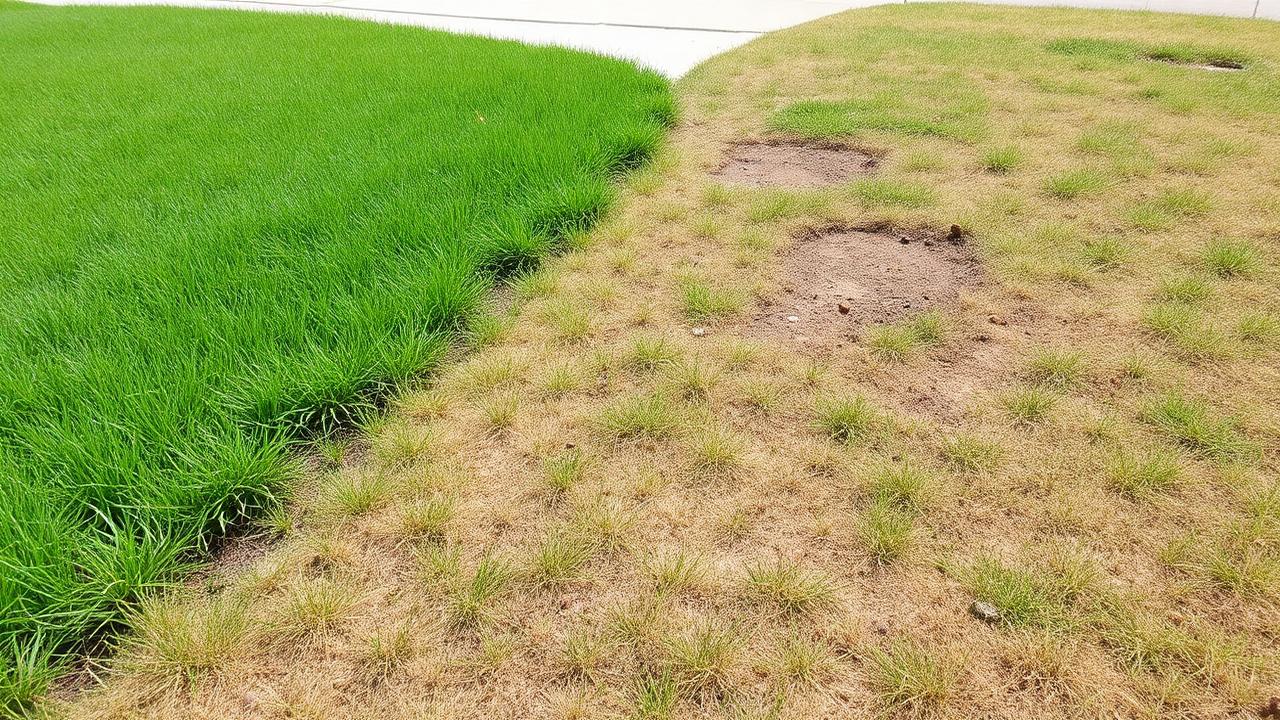
Start by watching the system run
Run each zone manually in daylight and watch the whole cycle. Ninety percent of dry-spot diagnoses happen in those few minutes.
Cause 1: Coverage gaps
If spray from one head does not reach the next, the midpoint dries out first. Look for crisp, rounded brown areas between heads.
Cause 2: Pressure problems
Too little pressure means short throw and donut-shaped dry rings around each head. Too much pressure atomizes water into mist that drifts away. Both are fixable with pressure-regulated bodies and correct nozzles.
Cause 3: Blocked or misaligned heads
Grass grown over a head, a shrub that has doubled in size, or an arc knocked out of alignment by a mower. This is the cheapest and most common fix.
Cause 4: Mixed nozzle types on one zone
Rotors apply water far more slowly than sprays. On a shared zone, the rotor area is chronically under-watered no matter the run time.
Cause 5: It is not the sprinklers
Grubs, chinch bugs, dog urine, compacted soil over buried construction debris and shallow soil over bedrock all mimic irrigation failure. If the pattern does not correspond to head locations, investigate the soil. Pull gently on the affected turf: if it lifts like a carpet, you have grubs, not a watering problem.
Confirm with a catch-cup audit
Set straight-sided containers across the zone, run 15 minutes, and compare depths. A well-tuned zone varies by less than 25% between cups. Bigger spreads confirm a hydraulic problem worth a service visit.
Send us photos and your catch-cup results with a service request and we will tell you what we expect to find before we arrive.