Drip Irrigation for Garden Beds: A GTA Homeowner Guide
Spray heads are wrong for garden beds. Drip line delivers water at the root zone, cuts usage and keeps foliage dry.
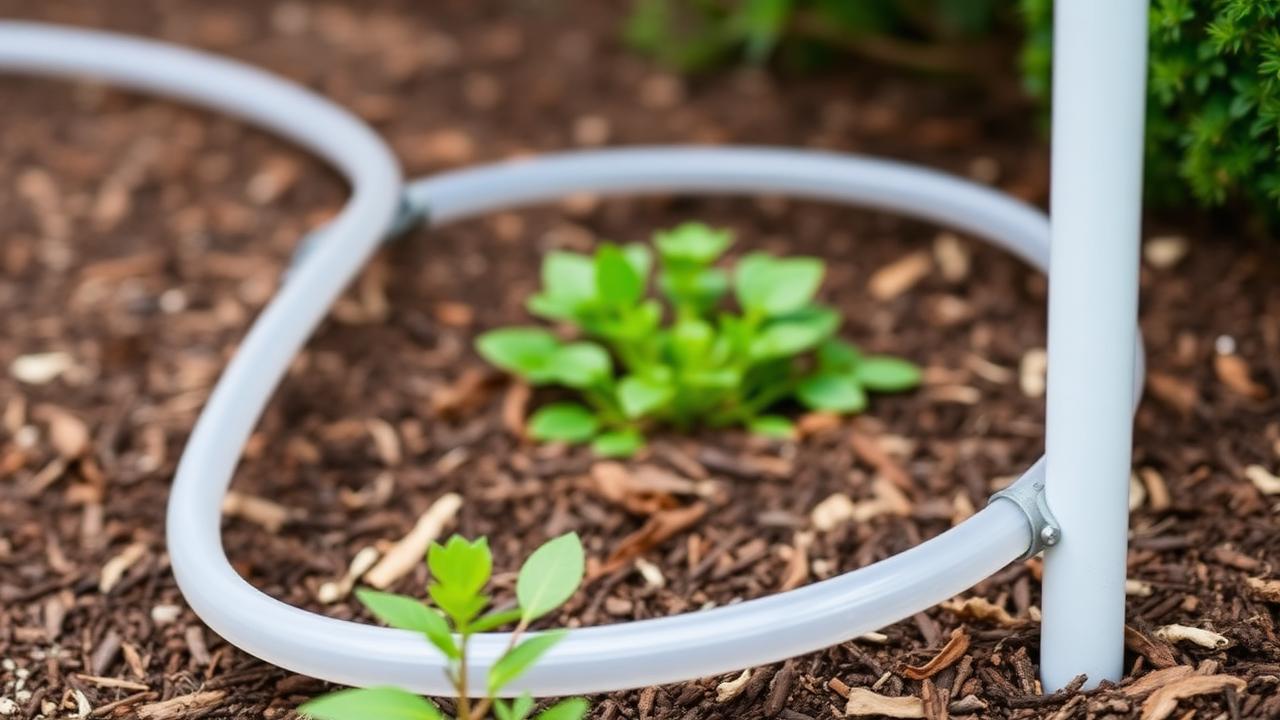
Why beds should not be on spray heads
Spray heads throw water over foliage and mulch. In a garden bed that means wet leaves, fungal pressure, washed-out mulch and water landing on the fence instead of the roots.
How drip works
Inline drip tubing has pressure-compensating emitters spaced every 30 or 45 cm. Water seeps out slowly and spreads laterally through the soil, so the root zone stays evenly moist with a fraction of the flow. A zone that would need 15 gpm as spray may need 2 gpm as drip.
Designing a drip zone
- Dedicated zone. Never mix drip and spray on one valve; run times differ by an order of magnitude.
- Pressure regulation and filtration. Drip runs at 20-30 psi and needs a filter to keep emitters clear.
- Layout. Loop tubing around shrubs, run parallel lines 30-45 cm apart across perennial beds, and use individual emitters for trees.
- Mulch over top. Tubing under 5-7 cm of mulch is protected from UV and stays out of sight.
Run times
Drip zones typically run 30 to 60 minutes, two or three times a week, versus 15 to 20 minutes for spray. Longer, slower, deeper.
Retrofitting an existing system
Converting a bed zone from spray to drip usually means capping the spray heads, adding a filter and regulator at the valve, and laying tubing. It is a same-day job on most GTA properties and it typically pays for itself in reduced water usage and healthier plantings within a few seasons.